



Supercomputers and the data centres they live in have an impact on the environment, and it is important for these centres to work to reduce this impact. Choices on cooling methods, data centre location, energy sources, and more, all affect the environmental impact of running these systems and data centres.
read more
ARCHER2 is the latest iteration of the UK National Supercomputing Service, and enables scientists to simulate the world around us in ways that are often impossible (or far too expensive) to study with physical experiments. ARCHER2 is regularly used to study topics such as how jet engines can be made more efficient, how we can design better nuclear reactors, how new drugs might work, how viruses spread, and the effects of climate change to name just a small few.
read more
Supercomputers are vast computers that allow us to run large, complex and cutting-edge simulations that can’t be done elsewhere. Our exhibit will showcase the good, the bad and the beautiful about supercomputers.
read more
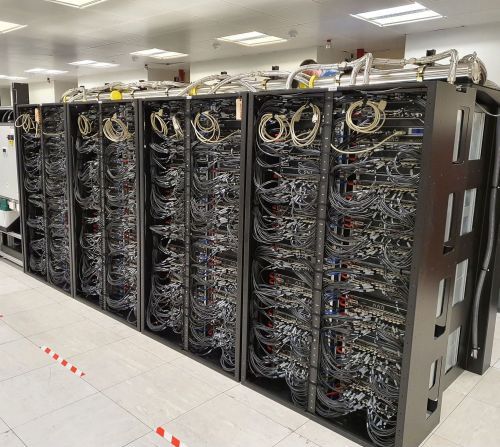
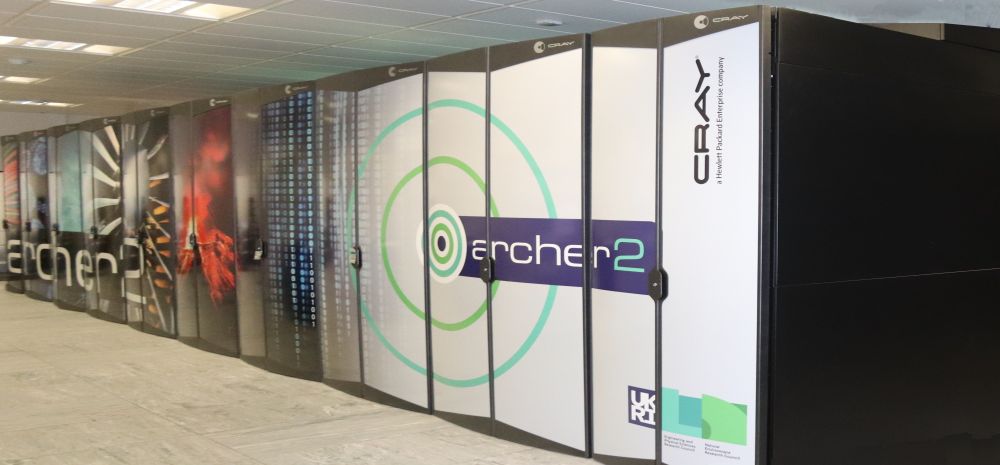
ARCHER2, the UK’s National Supercomputing Service, stands as a world-class advanced computing resource for UK researchers. Powered by the HPE Cray EX supercomputing system, ARCHER2 boasts an estimated peak performance of 28 Pflop/s. With 5,848 nodes, each housing dual AMD EPYCTM 7742 64-core processors clocked at 2.25GHz, the machine contains a total of 750,080 cores. Running ARCHER2 requires specialist staff and facilities, along with a massive power supply. The system is capable of over eleven times the scientific throughput of its predecessor, ARCHER.
read more
Supercomputers are composed of very large numbers of computational cores, all working together to solve these challenges. Our hook-a-duck activity is designed demonstrate what a supercomputer is and how they work in parallel - you have 30 seconds to hook as many ducks as you can!
read more
HardwareActivities
ARCHER2, the UK’s National Supercomputing Service, stands as a world-class advanced computing resource for UK researchers. Powered by the HPE Cray EX supercomputing system, ARCHER2 boasts an estimated peak performance of 28 Pflop/s. With 5,848 nodes, each housing dual AMD EPYCTM 7742 64-core processors clocked at 2.25GHz, the machine contains a total of 750,080 cores. Running ARCHER2 requires specialist staff and facilities, along with a massive power supply. The system is capable of over eleven times the scientific throughput of its predecessor, ARCHER.
read more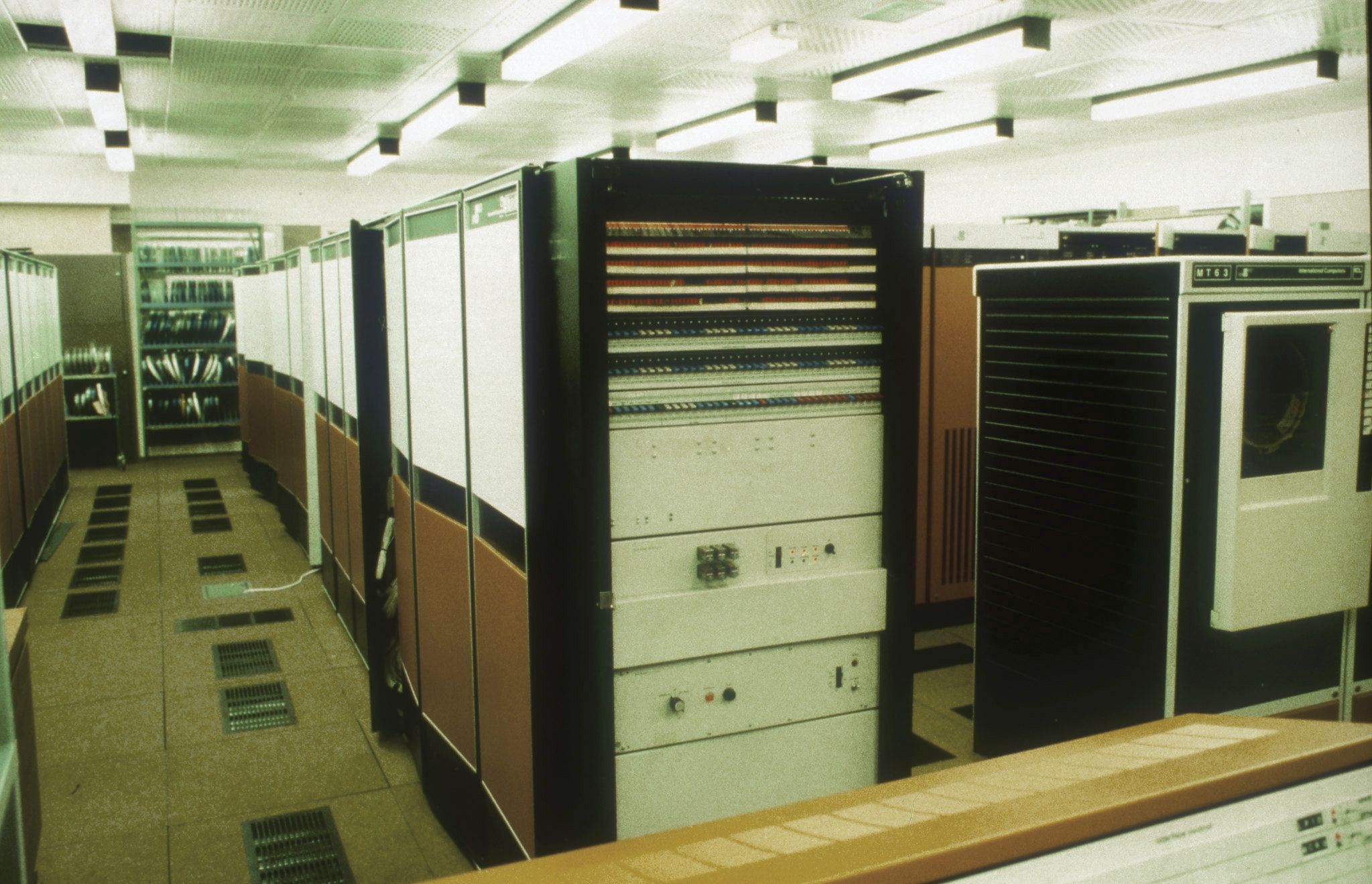
Hardware
This virtual museum showcases nearly 40 years of supercomputers at EPCC, which hosts and manages ARCHER2 on behalf of UKRI, and how the technology has changed over time.
read more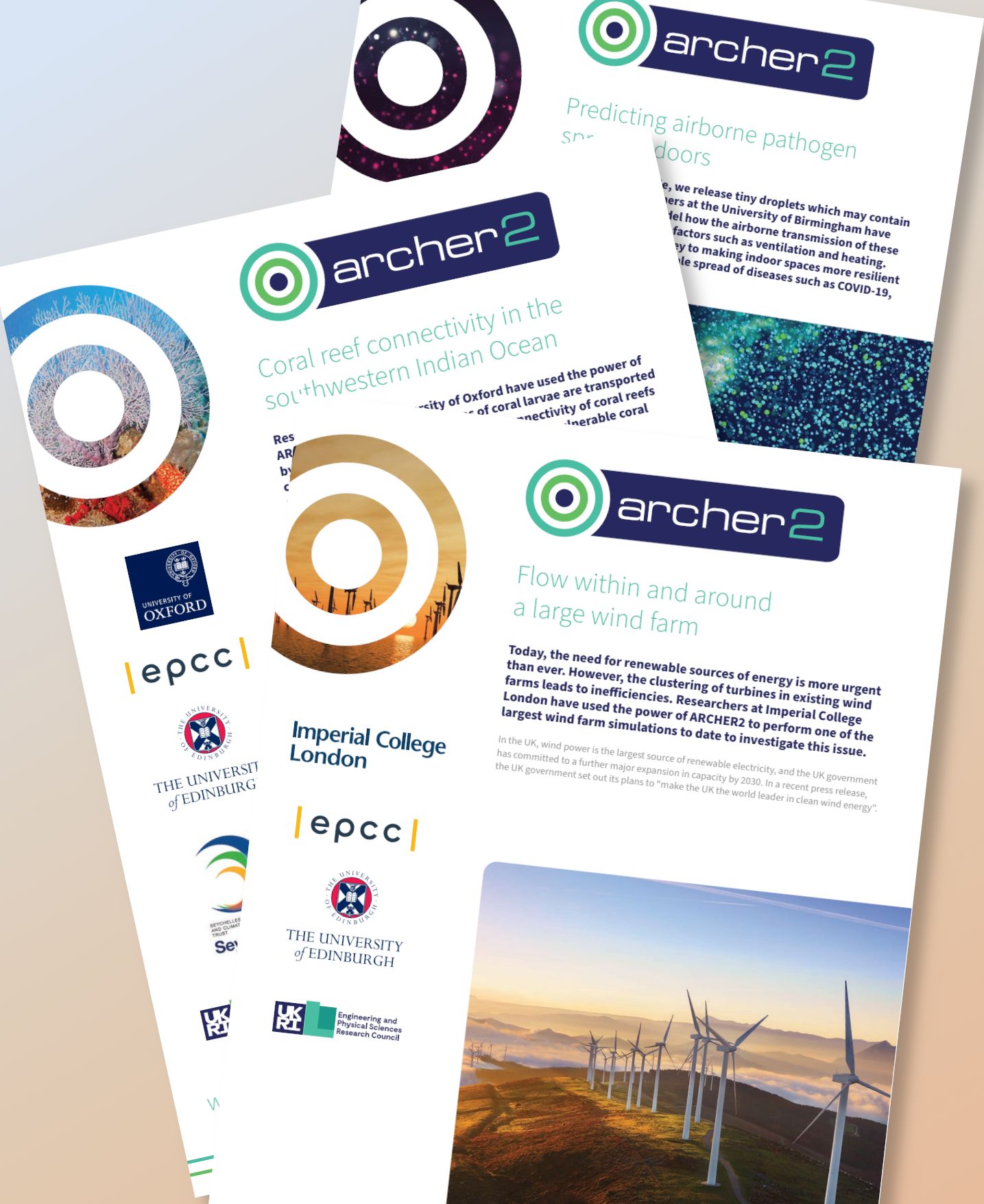
Leaflets
We have created a collection of Case Studies highlighting ARCHER2 research
read moreHardwareLeaflets
Download our ARCHER2 Hardware leaflet to learn more about what is inside the cabinets.
read more
Leaflets
Download our Beautiful Binary leaflet to learn more about how computers store information and perform calcuations.
read more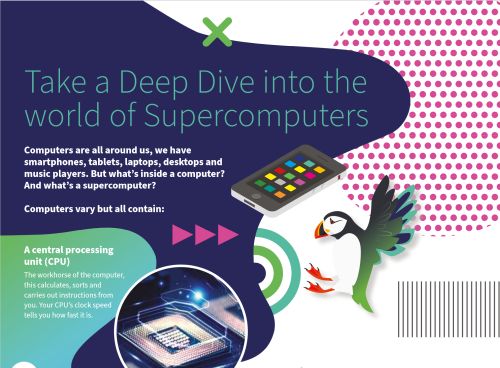
ActivitiesLeafletsHardware
Download our Deep Dive leaflet to find out about the parts that make up a Supercomputer, and why Supercomputers are super!
read more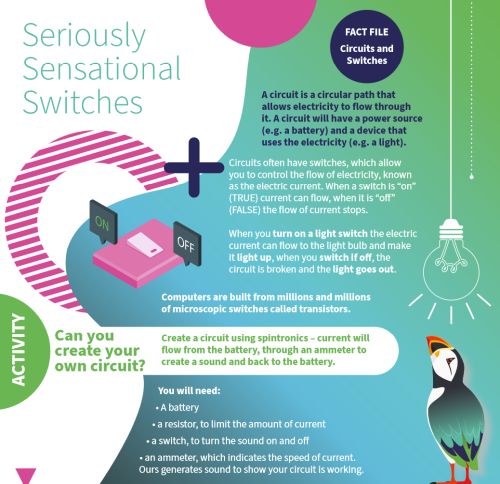
ActivitiesLeaflets
Download our Sensational Switches leaflet to learn more about switches, transistors, logic, sensors and more, and you can even try building your own circuits to try things out.
read moreActivities
We have created a collection of Postcards highlighting ARCHER2 research - all downloadable as PDF
read more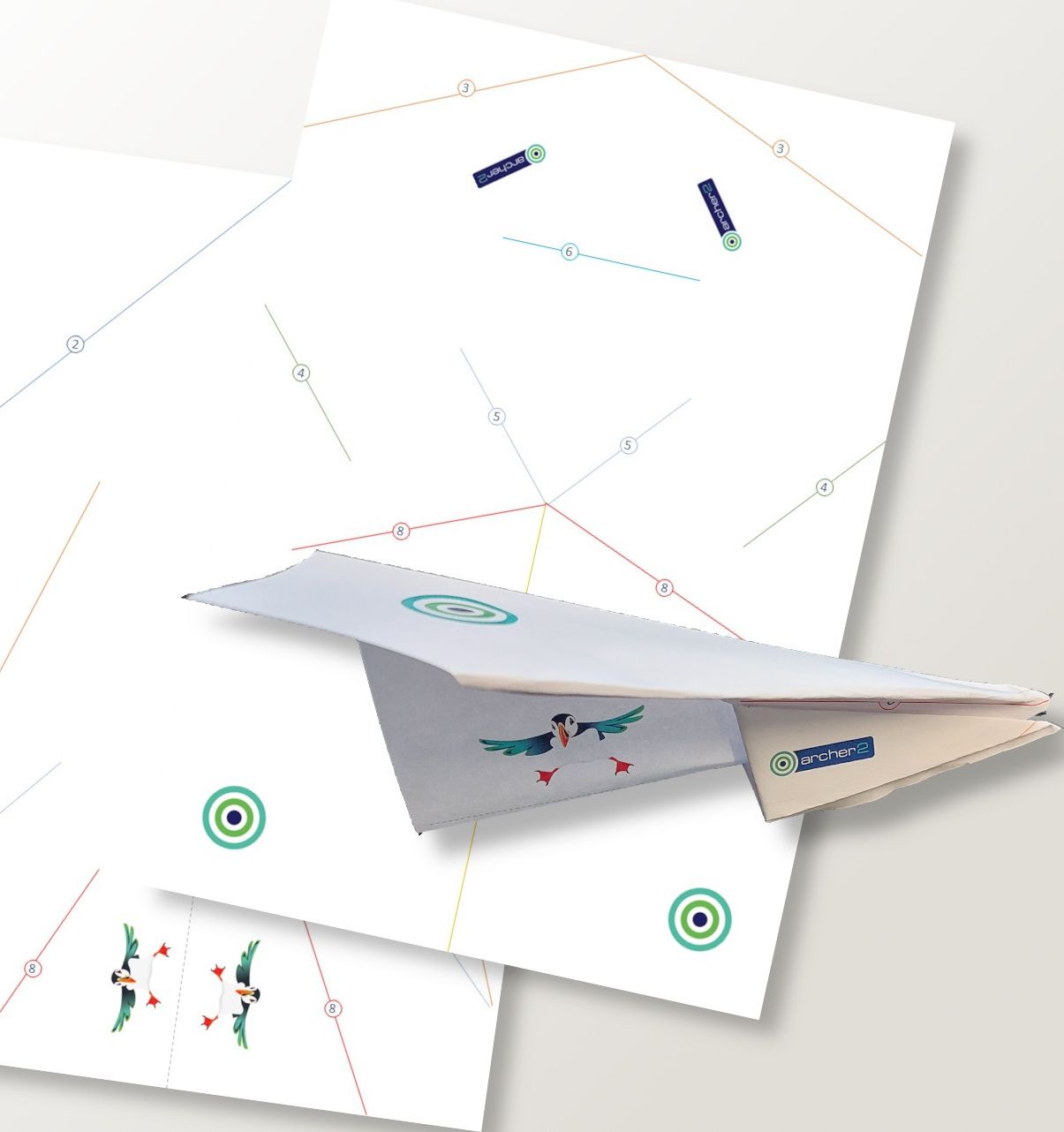
Activities
You can make our ARCHER2 paper plane.
Print off the template sheet, double sided.
read more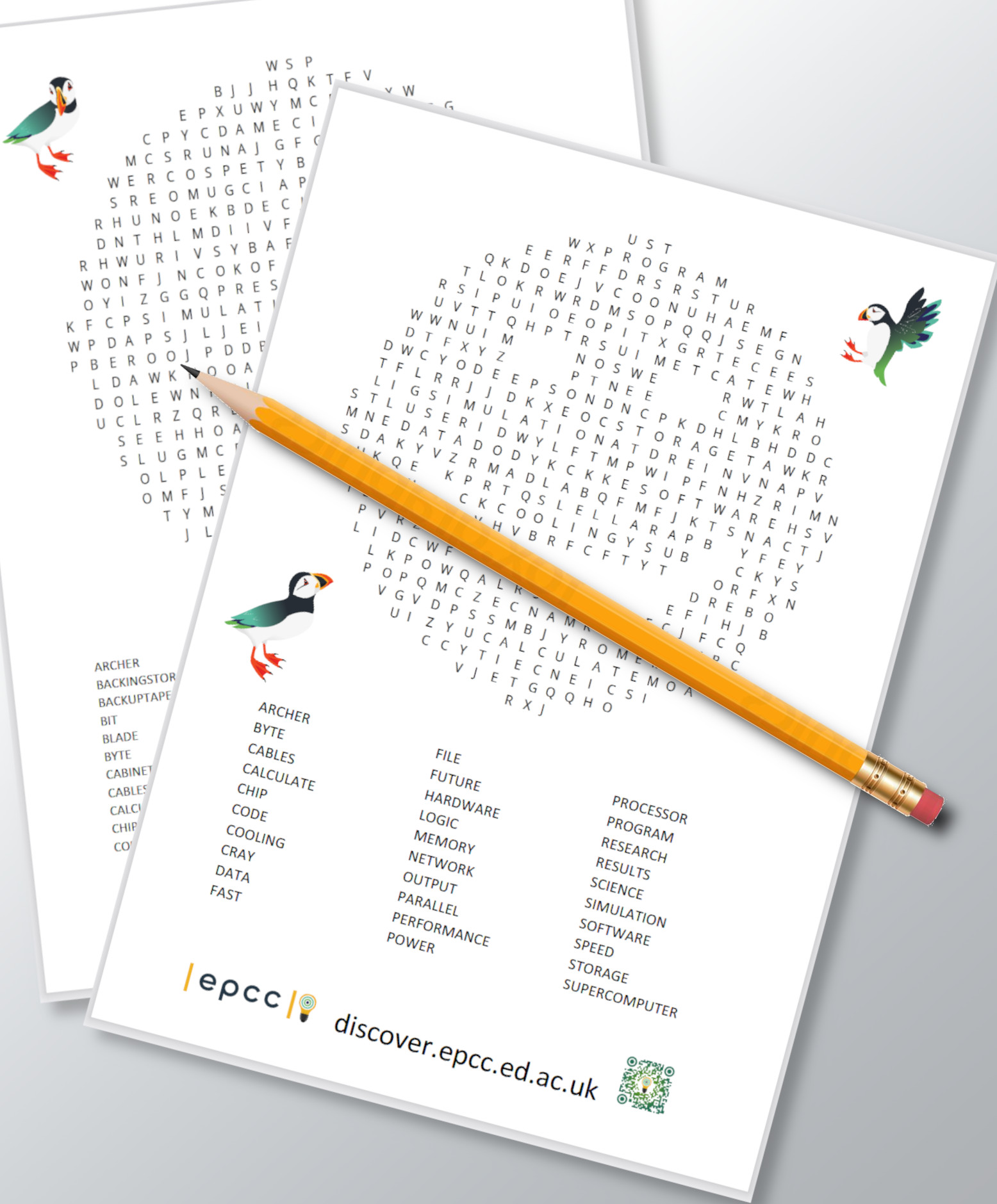
Activities
Challenge yourself
to one of our wordsearches
read more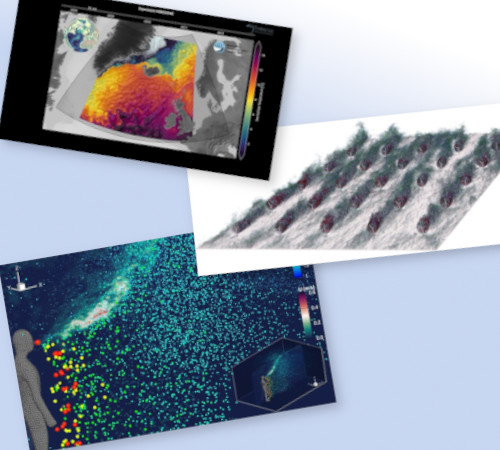
Activities
We have created a gallery of images and videos, many from the ARCHER2 Image and video competitions.
read moreHardwareActivities
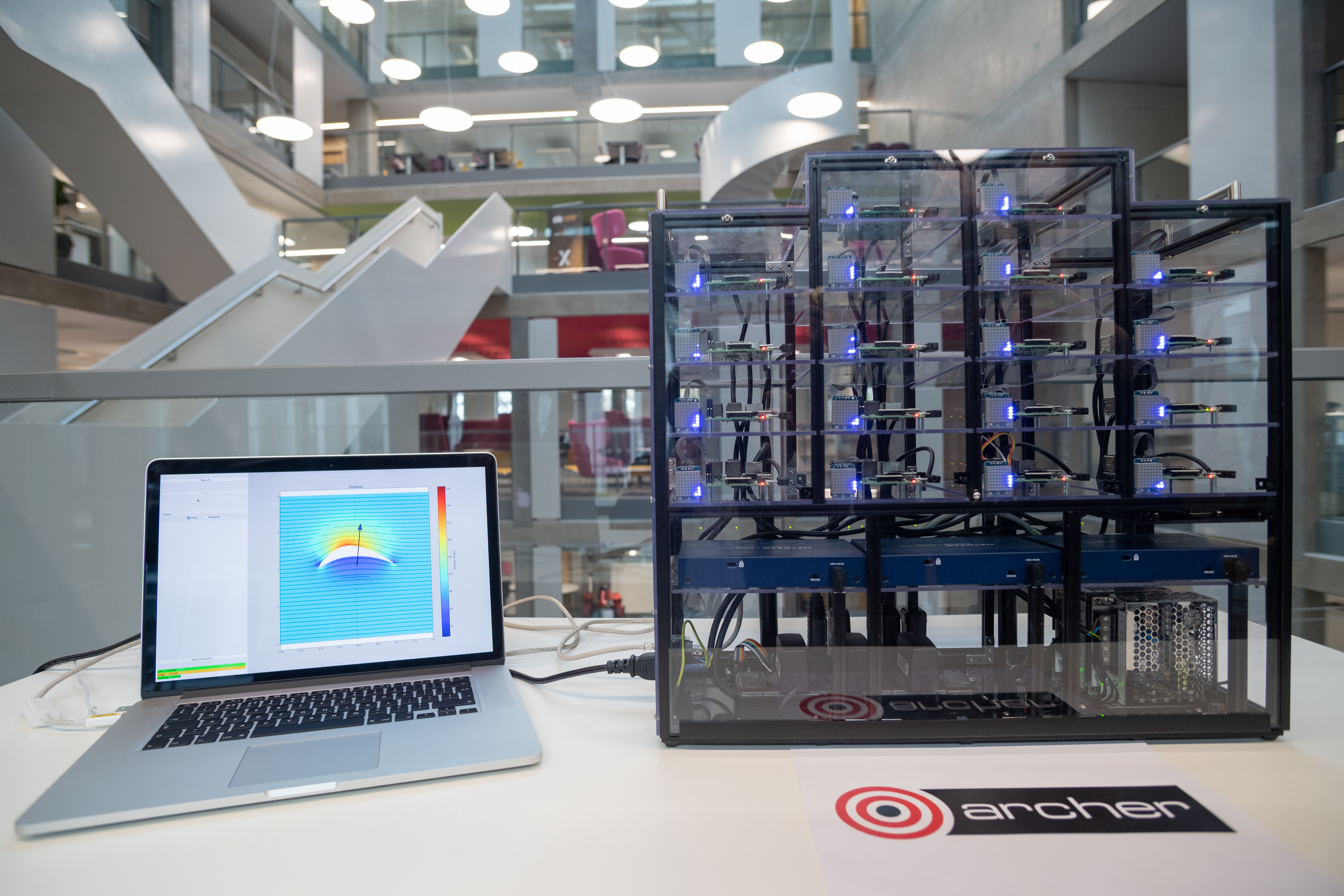
ARCHER2 is made of 23 cabinets containing 5,848 nodes. It requires specialist staff and facilities to run, plus a massive power supply - it’s not possible to transport parts of it to science festivals and other events! For that reason, we have created Wee Archie to help teach people of all ages about Supercomputers.
read moreHardware
Supercomputers are often made up of a large number of coupled computer cores – the brains of the computer - all working together in parallel.
read more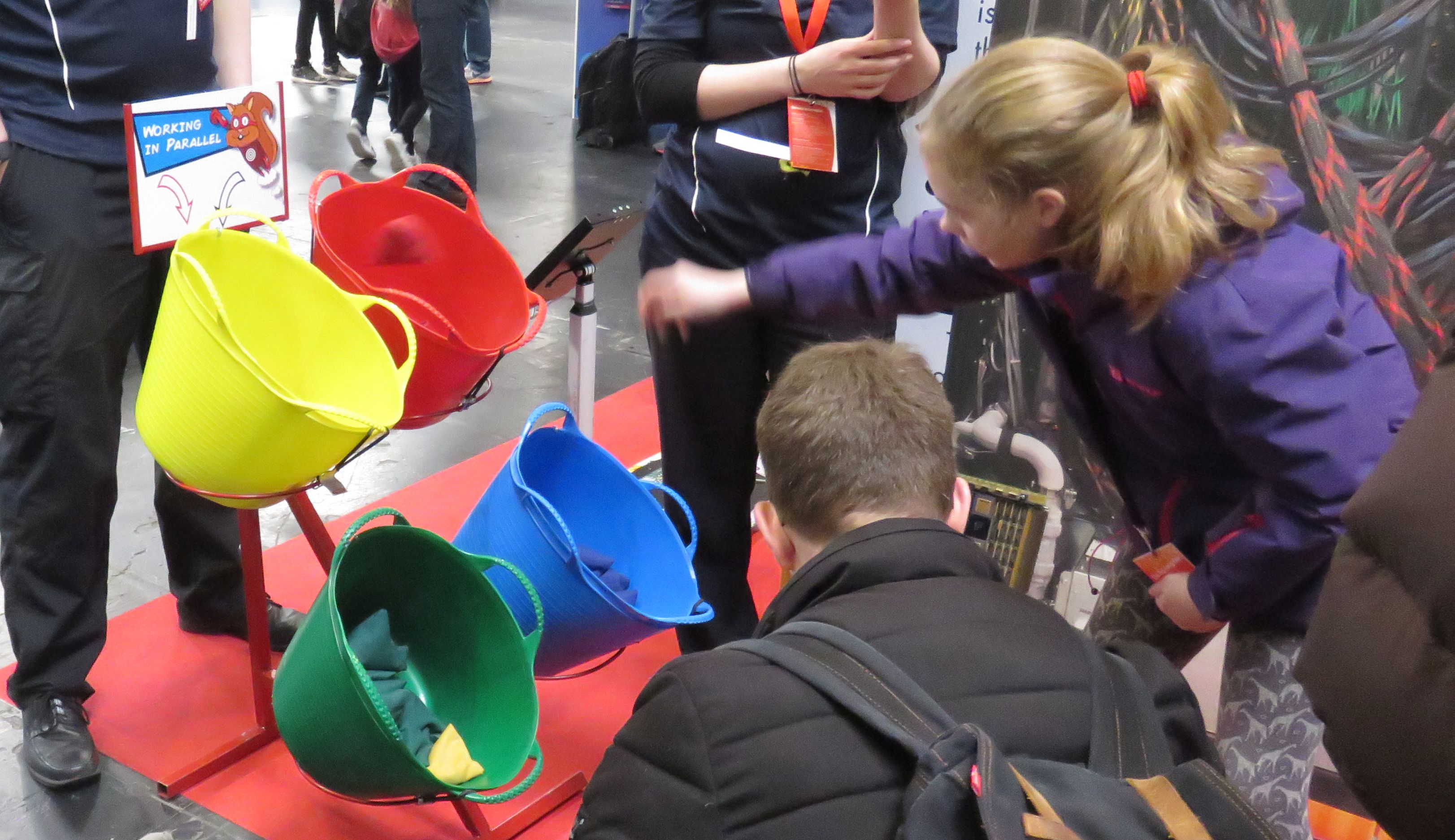
Activities
The parallel sorting game is a simple, group activity to show why parallel computers are needed. It’s very hands-on and does not require a computer or other technology to play. Players complete a sorting task in groups of various sizes, and see how the number of objects sorted changes with the size of group.
read moreHardware
A supercomputer is an extremely fast computer,usually millions of times faster than a normal home computer.
read moreHardware
Supercomputers allow us to understand things that are too difficult to see or measure in real life.
read moreWe are here to tell you a bit about Supercomputers and what we do with them.
read more
Strikes the upper surface of the impenetrable foliage of my trees, and but a few stray gleams steal into the inner sanctuary, I throw myself down among the tall grass by the trickling stream and, as I lie close to the earth, a thousand unknown plants are noticed by me.
When I hear the buzz of the little world among the stalks, and grow familiar with the countless indescribable forms of the insects and flies, then I feel the presence of the Almighty, who formed us in his own image, and the breath of that universal love which bears and sustains.